
- Poet
- Alfred, Lord Tennyson (England)
- Syllabus theme
- Nature
- Form
- Two three-line stanzas (tercets), each with one rhyme
- Metre
- Iambic tetrameter: four beats per line
- Key idea
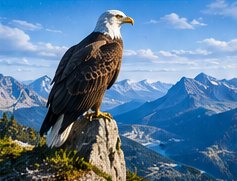
- The majesty, power and isolation of the eagle
About the poet
Alfred, Lord Tennyson is considered the greatest poet of the Victorian age in England, and he is well known for his craftsmanship: his careful choice of words, sounds and rhythm. He became Poet Laureate, the official national poet. His greatest work, In Memoriam, was written in memory of his close friend Arthur Hallam, whose early death left Tennyson heartbroken.
"The Eagle" shows his craftsmanship in miniature: in just six lines, every word works hard to create a vivid picture.
Background
Eagles are large, powerful birds of prey with hooked beaks, excellent eyesight and strong talons for catching prey. They build their nests on high cliffs or in tall trees. Tennyson's poem pictures a lone eagle perched high on a rocky cliff above the sea, and captures the moment it dives.
The original LitHelp notes connect the poem with a real incident in Sri Lanka, when a group of men skinned an eagle alive and posted the picture online, causing public outrage and leading to their arrest and punishment. The poem's admiration for the eagle makes such cruelty seem even more shameful.
"The Eagle" is prescribed under the theme Nature, with "To the Nile", "A Bird Came Down the Walk" and "To the Evening Star". Compare Dickinson's small, nervous bird on the ground with Tennyson's mighty eagle in the sky.
Setting
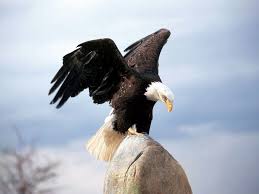
A high, lonely crag (a steep rock) on a mountain cliff, "close to the sun", surrounded by blue sky, with the sea far below. The setting emphasises height, distance and solitude.
Synopsis
An eagle grips a rocky crag with its claws. It stands alone, high up near the sun, surrounded by the blue sky. Far below, the sea looks small and wrinkled, as if it is crawling. The eagle watches from its mountain walls, and then suddenly drops like a thunderbolt.
Line-by-line analysis
Line 1He clasps the crag with crooked hands;
The poem begins with a powerful close-up. Calling the eagle "he" and its claws "hands" personifies the bird, giving it human qualities. "Clasps" suggests a firm, tenacious grip as the eagle balances on a rock exposed to the wind. "Crooked" describes the curved, gnarled talons and suggests age and toughness. The harsh alliteration of the "cr" and "c" sounds (clasps, crag, crooked) makes the line sound hard and strong.
Line 2Close to the sun in lonely lands,
The close-up changes into a long shot, like in a film. "Close to the sun" is hyperbole: the eagle is so high it seems to be near the sun. "Lonely lands" suggests the eagle's isolation and its rule over the wild heights. The long "o" sounds (close, lonely) create a feeling of distance, and the alliteration of "l" (lonely lands) makes the line musical.
Line 3Ring'd with the azure world, he stands.
"Azure" means deep sky-blue. The eagle is "ring'd" (surrounded) by the blue sky. The phrase "azure world" makes the sky seem like the eagle's own kingdom. The comma before "he stands" (a caesura, or pause) and the still verb "stands" create a moment of perfect stillness, like a still shot in cinema. Lines 1–3 all rhyme (hands, lands, stands), which binds the picture together.
Line 4The wrinkled sea beneath him crawls;
Now we see from the eagle's point of view: a bird's-eye view. From that height, the huge waves look like tiny "wrinkles", and the sea seems to "crawl". This is personification and metaphor. It reverses our normal view: the mighty sea looks small and weak beside the eagle. The original notes point out that "wrinkled" suggests an old person and "crawls" a baby, so together they may hint at the cycle of life.
Line 5He watches from his mountain walls,
"Watches" builds tension: the eagle is alert, perhaps watching for prey far below. "Mountain walls" is a metaphor that makes the cliffs seem like the walls of a castle or fortress, the eagle's royal home. It also suggests how steep and inaccessible the cliffs are.
Line 6And like a thunderbolt he falls.
The poem ends in a sudden, dramatic climax. The simile "like a thunderbolt" conveys great speed, power and danger, and suggests a natural force that strikes without warning. (The original notes link it to the thunder god of Norse myth.) "Falls" contrasts sharply with "stands" in line 3: stillness explodes into motion. The prey below has little chance of escape.
Sinhala translation (by R.C. Fernando)
රාජාලියා
බදමින් උසැති ගිරිකුල ගොරහැඩි දෑතින්
අසලින් තෙදැති හිරු මඩලද පාලු බිමින්
නිසලව සිටී ඔහු වටකර නිල් ගුවනින්
රැලි වැටුණු සිඳු ඈත බඩගාන ලෙස පෙනෙත
කඳු පවුර මත සිටින උකුසු නෙත යොමු කරත
සැන අකුණු පහර ලෙස ගොදුර වෙත ඔහු පතිත
Translated by R.C. Fernando. (Copyright)
Themes
- Power and majesty of natureThe eagle is presented as a king: strong, proud and in control of its "azure world".
- Isolation"Lonely lands": the eagle's greatness sets it apart, alone above the world.
- FreedomHigh above the earth, the eagle is free and independent.
- The superiority of animalsThe original notes suggest the poem shows animals as superior to man, who prides himself on being the most intelligent being.
- Sudden death and fateThe final dive reminds us of the swift, unavoidable power of nature.
Literary techniques
| Technique | Example | Effect |
|---|---|---|
| Personification | "He", "crooked hands" | The eagle seems human, even royal |
| Alliteration | "clasps the crag with crooked"; "lonely lands" | Harsh strength; musical distance |
| Hyperbole | "Close to the sun" | Emphasises the eagle's great height |
| Imagery (colour) | "azure world" | Vivid picture of the endless blue sky |
| Metaphor / personification | "The wrinkled sea … crawls" | The sea looks small and weak from above |
| Metaphor | "mountain walls" | Cliffs like a castle or fortress |
| Simile | "like a thunderbolt he falls" | Speed, power and sudden danger |
| Contrast | "stands" vs "falls"; sky vs sea | Stillness bursts into motion |
| Caesura | "Ring'd with the azure world, he stands." | A pause that creates stillness |
| Rhyme and metre | aaa bbb; four beats per line | Compact, controlled, powerful |
Tone
Admiring, majestic and dramatic. The first stanza is calm and still; the second builds tension and ends in a sudden burst of action.
Context questions (Part I, Section A)
Each extract carries 5 marks: (a) text and author, 1; (b) speaker, person spoken to, or situation, 2; (c) inference or response, 2.
"The wrinkled sea beneath him crawls,
He watches from his mountain walls"
- From where are these lines taken? Who wrote them? 1
- Who is referred to as "he" in the second line? Where is he at this moment? 2
- Why does the sea crawl beneath him? 2
Show model answer (by LitHelp)
(a) "The Eagle" by Alfred, Lord Tennyson.
(b) "He" is the eagle. He is perched high on a rocky crag on a mountain cliff, close to the sun, looking down at the sea.
(c) From the eagle's great height, the huge waves of the sea look like small wrinkles, so the moving sea seems to "crawl" slowly beneath him. The image shows the eagle's height and power.
"He clasps the crag with crooked hands;
Close to the sun in lonely lands,"
- Name the poem and the poet. 1
- What are the "crooked hands"? What is "he" doing? 2
- Identify two sound devices in the first line and explain their effect. 2
Show model answer
(a) "The Eagle" by Alfred, Lord Tennyson.
(b) The "crooked hands" are the eagle's curved talons. He is gripping tightly to a rocky crag high on a mountain.
(c) Alliteration of the hard "cr/c" sound (clasps, crag, crooked) suggests strength and toughness. The rhyme with "lands" and "stands" binds the lines together. Personification ("He", "hands") is also acceptable as a device in the line.
"And like a thunderbolt he falls."
- From which poem is this line taken? Who wrote it? 1
- What is happening in this line? 2
- Explain the effect of the simile. 2
Show model answer
(a) "The Eagle" by Alfred, Lord Tennyson.
(b) The eagle suddenly dives from the cliff towards the sea far below, probably to catch its prey.
(c) "Like a thunderbolt" shows the dive's tremendous speed, power and suddenness. Like lightning, the eagle strikes without warning, and its prey has little chance of escape.
Essay questions (Part II, Poetry)
Content 7 · Organisation 4 · Language 4.
"In only six lines, Tennyson presents the eagle as a powerful and majestic creature." Discuss. 15
Show model answer
Alfred, Lord Tennyson's "The Eagle" is a short poem of just two three-line stanzas, yet it creates a vivid and unforgettable picture of the eagle as a powerful, majestic creature. Through personification, imagery and sound, Tennyson makes the bird seem like a king of nature.
From the first line, the eagle is given human dignity: "He clasps the crag with crooked hands". Calling the bird "he" and its talons "hands" personifies it, while the harsh alliteration of "clasps", "crag" and "crooked" suggests its strength and tenacity. "Crooked" describes the curved, powerful talons that make the eagle a fearsome hunter.
The eagle's majesty comes from its position. It stands "Close to the sun in lonely lands", a hyperbole that emphasises its great height, and it is "Ring'd with the azure world". The blue sky surrounds it like a kingdom. The pause before "he stands" and the stillness of the verb present the eagle calm and in control, like a monarch surveying his realm.
In the second stanza Tennyson shows the world from the eagle's point of view. "The wrinkled sea beneath him crawls": the mighty sea, normally a symbol of great power, is reduced to a crawling, wrinkled surface. The eagle "watches from his mountain walls", a metaphor that makes the cliffs seem like a castle fortress.
The final line reveals the eagle's power in action: "And like a thunderbolt he falls." The simile conveys speed, force and sudden danger. The contrast between "stands" and "falls" turns stillness into explosive movement, and the poem ends at its most dramatic moment.
The tight form also reflects the eagle's power. Each stanza has a single rhyme (hands, lands, stands; crawls, walls, falls) and four strong beats per line, so the poem feels compact and controlled. In conclusion, through personification, hyperbole, vivid imagery, metaphor and a striking final simile, Tennyson presents the eagle as a majestic and mighty ruler of the skies, all in just six lines.
Compare the presentation of birds in "The Eagle" and "A Bird Came Down the Walk". 15
Show answer plan
- Introduction: both poems personify a bird and observe it closely, but the effects differ.
- Setting: the eagle is high in "lonely lands"; Dickinson's bird is on the ground, on a garden walk.
- Character: the eagle is majestic and in control; the small bird is nervous ("frightened Beads") and polite.
- Point of view: Tennyson gives a bird's-eye view ("wrinkled sea"); Dickinson's speaker observes from nearby and offers a crumb.
- Movement: both end with flight. The eagle falls "like a thunderbolt"; the small bird rows "softer Home", "plashless".
- Techniques: personification in both; simile; compact rhyme in Tennyson against dashes and unusual images in Dickinson.
- Themes: the power of nature against the beauty and danger of nature.
- Conclusion: two contrasting views of nature's wonder.
- Calling the metre "pentameter". Each line has four beats (tetrameter).
- Saying the eagle is falling by accident. It dives deliberately and powerfully.
- Saying the sea really crawls. It only seems to, from the eagle's height.
- Listing techniques without explaining their effect on the picture of the eagle.
Quick revision
Video and quiz
Now try this quiz…
The Eagle
by Alfred, Lord Tennyson · O/L Literature Interactive Quiz